Products
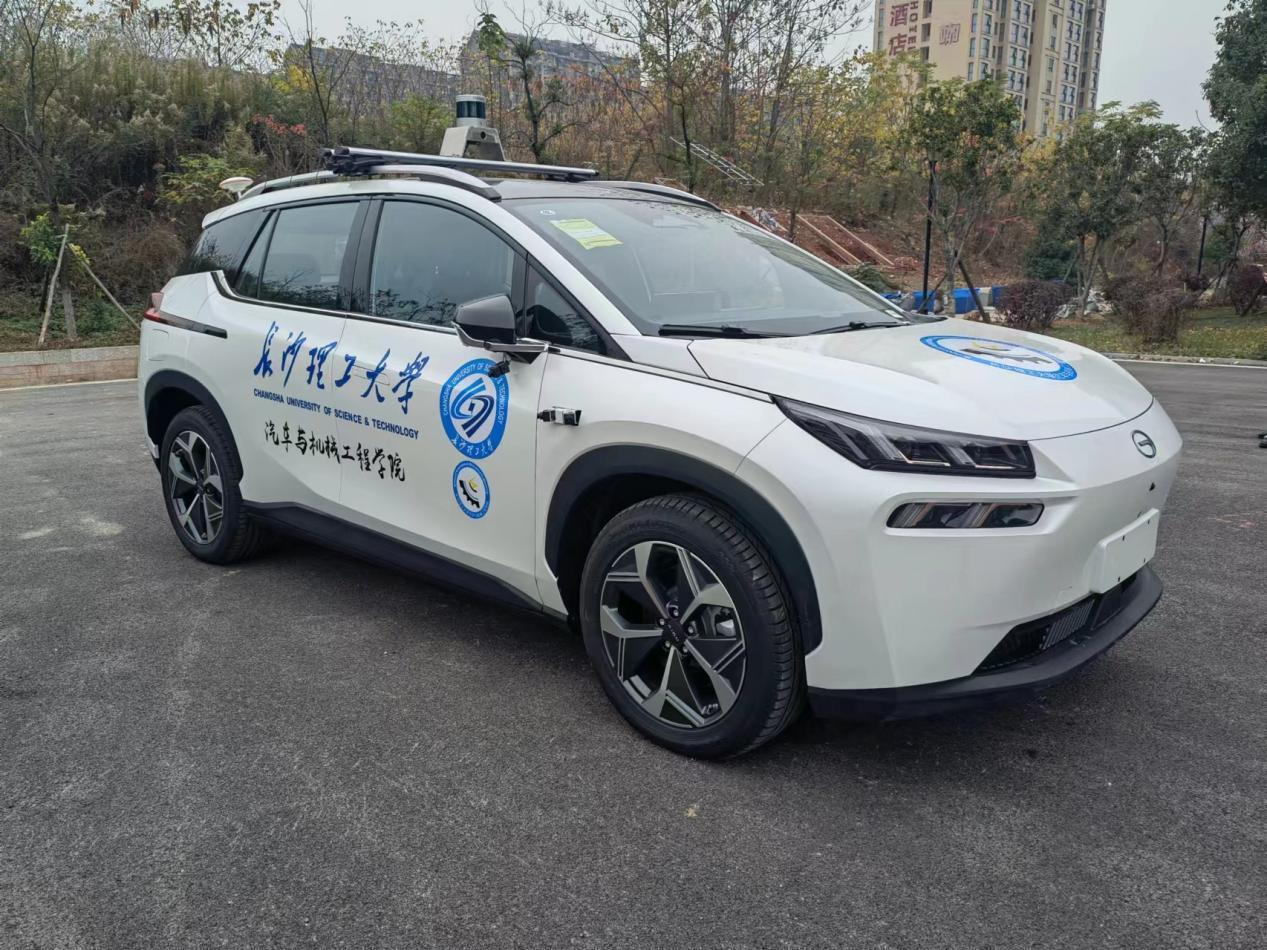
AION Y Autonomous Driving Test Platform

Photograph of the AION Y test car

1. AION Y Test Vehicle

The modified real vehicle is equipped with LiDAR, IMU, a multi-camera vision system, and an autonomous driving industrial controller, supporting autonomous driving tests, data acquisition, AEB tests, and active pre-tensioning seatbelt tests.

Overall vehicle dimensions (L × W × H)4786 × 1935 × 1685 mm
Wheelbase2920 mm
Front overhang926 mm
Rear overhang940 mm
Minimum ground clearance150 mm
Tire specification245/50 R20
Steering gear ratioSee AION LX parameter document
Maximum speedD gear: 120 km/h, R gear: 40 km/h
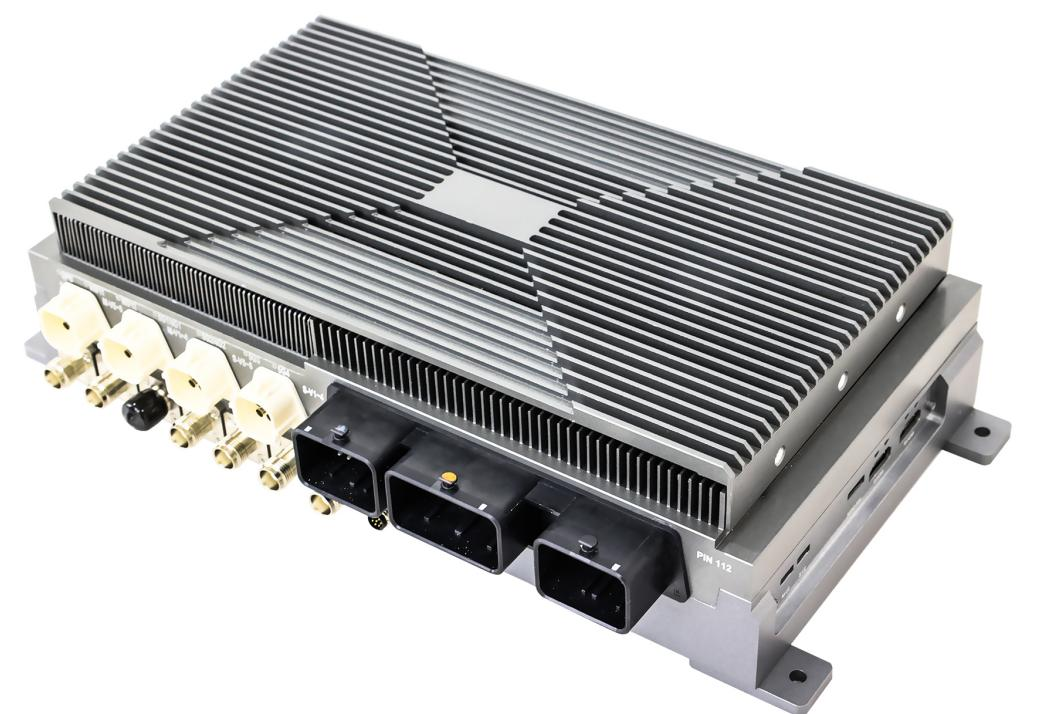
GEAC91VP industrial PC

2. Industrial PC — GEAC91VP

The Tianzhun GEAC91VP controller is a domain controller specially designed for autonomous vehicles, including mobile robots, robotaxis, and robobuses. It integrates two NVIDIA Jetson Xavier computing units inside and delivers computing capabilities for multi-sensor fusion perception, planning, prediction, decision-making, and other functions.

An Infineon automotive-grade multi-core MCU TC397 is embedded on the mainboard to execute critical tasks such as vehicle control and system state management. A built-in GPS module and CPLD chip constitute a time synchronization system, ensuring time synchronization across the entire sensing, computing, and control system.

The GEAC91VP supports sensors commonly deployed on autonomous vehicles, including GMSL cameras, LiDAR, millimeter-wave radars, and ultrasonic radars. Available in water-cooled and air-cooled versions.

ProcessorNVIDIA Jetson AGX Xavier
CPU2.2 GHz, 8-core ARM v8.2 64-bit CPU, 8MB L2 + 4MB L3
AI performanceUp to 64 TOPS (32 TOPS per Xavier)
DL accelerator2× NVDLA Engines
Vision accelerator7-way VLIW Vision Processor
GPU512-core NVIDIA Volta™ GPU with 64 Tensor Cores
Memory32GB 256-Bit LPDDR4x, 137GB/s
Storage32GB eMMC 5.1
Video encodeUp to 30×1080p30 (H.264)
Video decodeUp to 32×1080p30 (H.264)
Co-processorInfineon AURIX 32-bit microcontroller TC397
Co-processor CPU6 cores, maximum 300 MHz frequency
Co-processor memoryUp to 16MB program flash, up to 1MB data flash, 768KB SRAM

3. 4G Wireless Communication Gateway — USR-G781

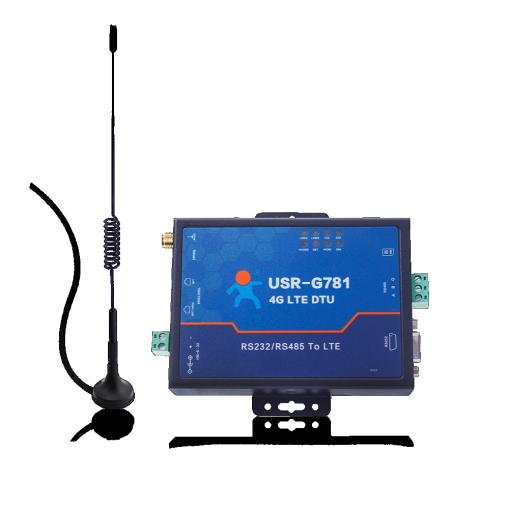
The USR-G781 is a wireless transmission device that integrates the functions of a 4G router and a 4G DTU. Combining the dual strengths of routers and DTUs, it adopts an industrial high-performance processor, multi-protected hardware interfaces, secure and stable VPN tunnels, and low-latency, high-efficiency 4G modules, meeting application requirements under harsh environments and diverse networking demands.

Featuring stability, reliability, and security, it is applicable to industrial scenarios and widely deployed in power, water conservancy, petroleum, municipal engineering, environmental protection, logistics, and other industries.

USR-G781 4G wireless communication gateway
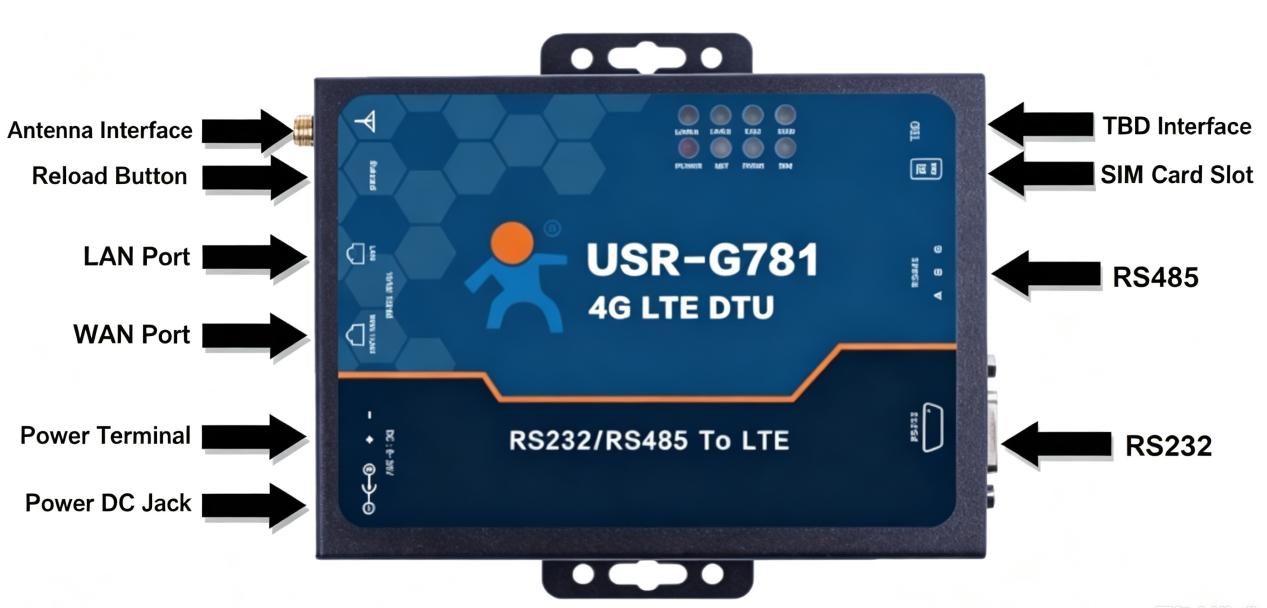
USR-G781 interface description
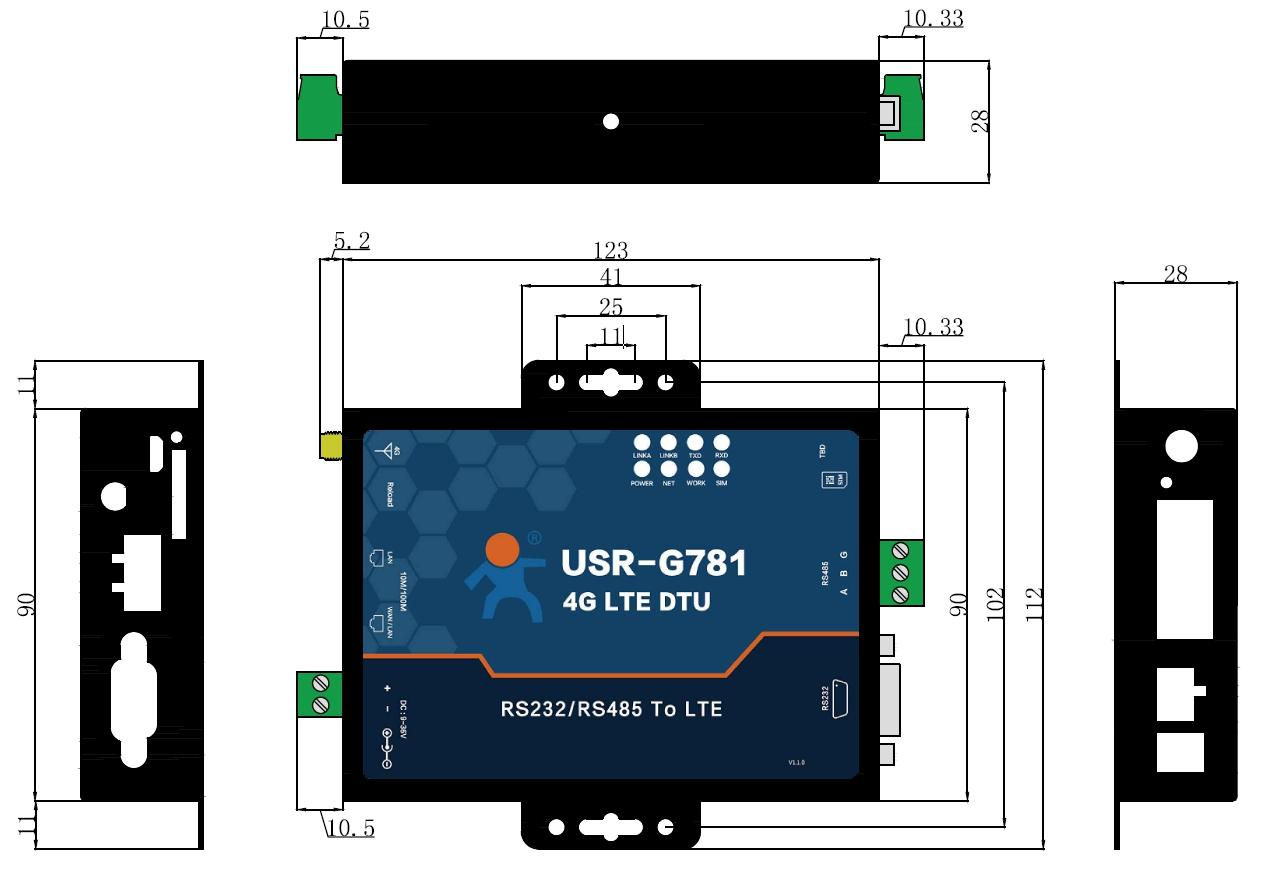
USR-G781 dimension diagram
  • Supports multiple 4G module versions: -18 (private network), -42 (5-mode), -43 (7-mode), -7G (GPS version), -A, -E, -AU
  • USR Cloud service for centralized management and improved O&M efficiency
  • High-performance ARM9 processor and embedded Linux system
  • 2 wired Ethernet ports, configurable as 1 LAN + 1 WAN or 2 LAN, 10/100 Mbps
  • APN private network SIM cards with pull-out SIM card holder
  • Hardware watchdog and one-key Reload function for high reliability
  • NTP automatic time synchronization
  • VPN support: PPTP, L2TP, GRE, IPSec, OpenVPN
  • Static routing table and firewall rule management
  • DDNS and Peanut Shell intranet penetration
  • Serial port modes: network transparent transmission, Modbus RTU/TCP, HTTPD
  • 4 concurrent connections (TCP/UDP Server/Client), each with a 10KB buffer
  • Registration and heartbeat packets, socket auto-reconnect, scheduled restart

4. Camera — Senyun Automotive Vision Module

The Senyun high-performance automotive camera module is designed by Shenzhen Senyun Intelligent Technology Co., Ltd. Adopting a high-dynamic automotive-grade image sensor paired with mainstream serial transmission chips, the module delivers high reliability. Featuring broad compatibility, it can adapt to various SoC platforms.

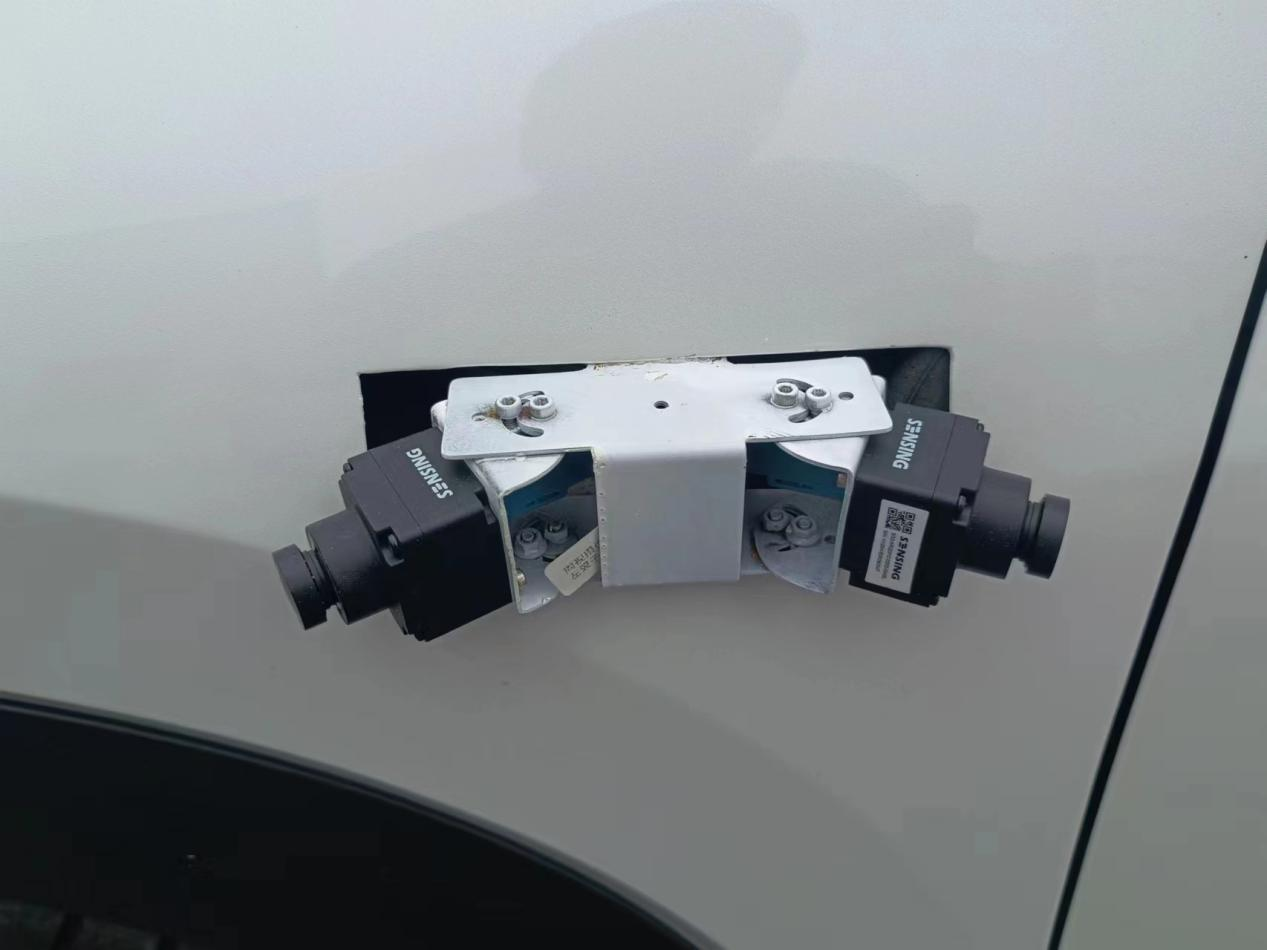
Installed physical camera, view 1
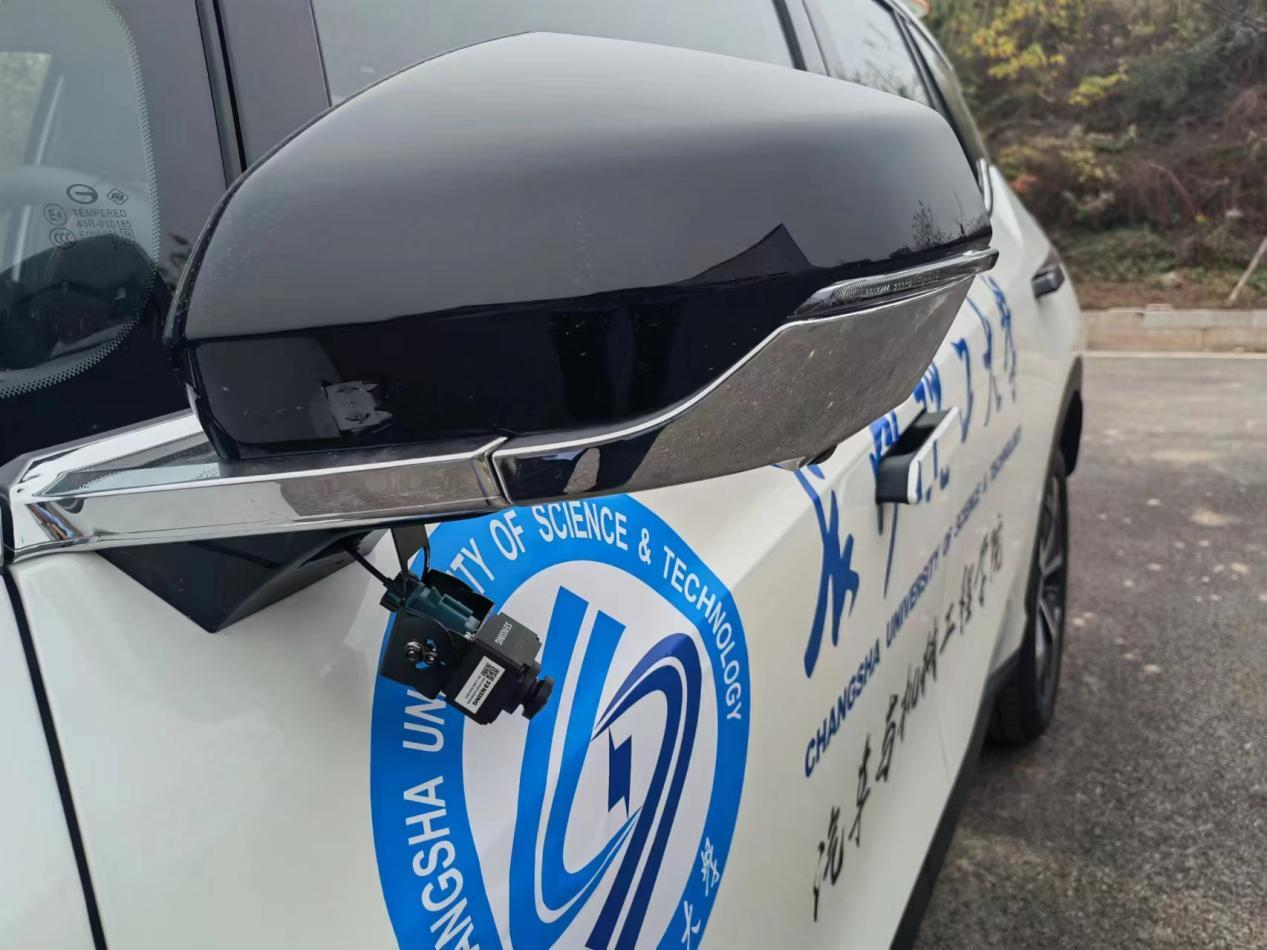
Installed physical camera, view 2
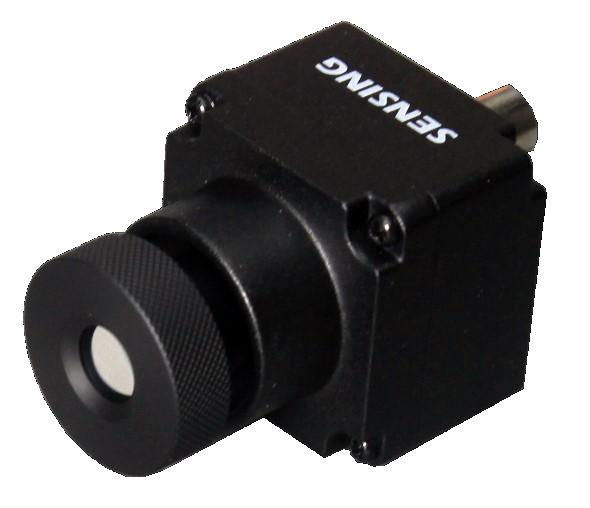
Camera sensor module
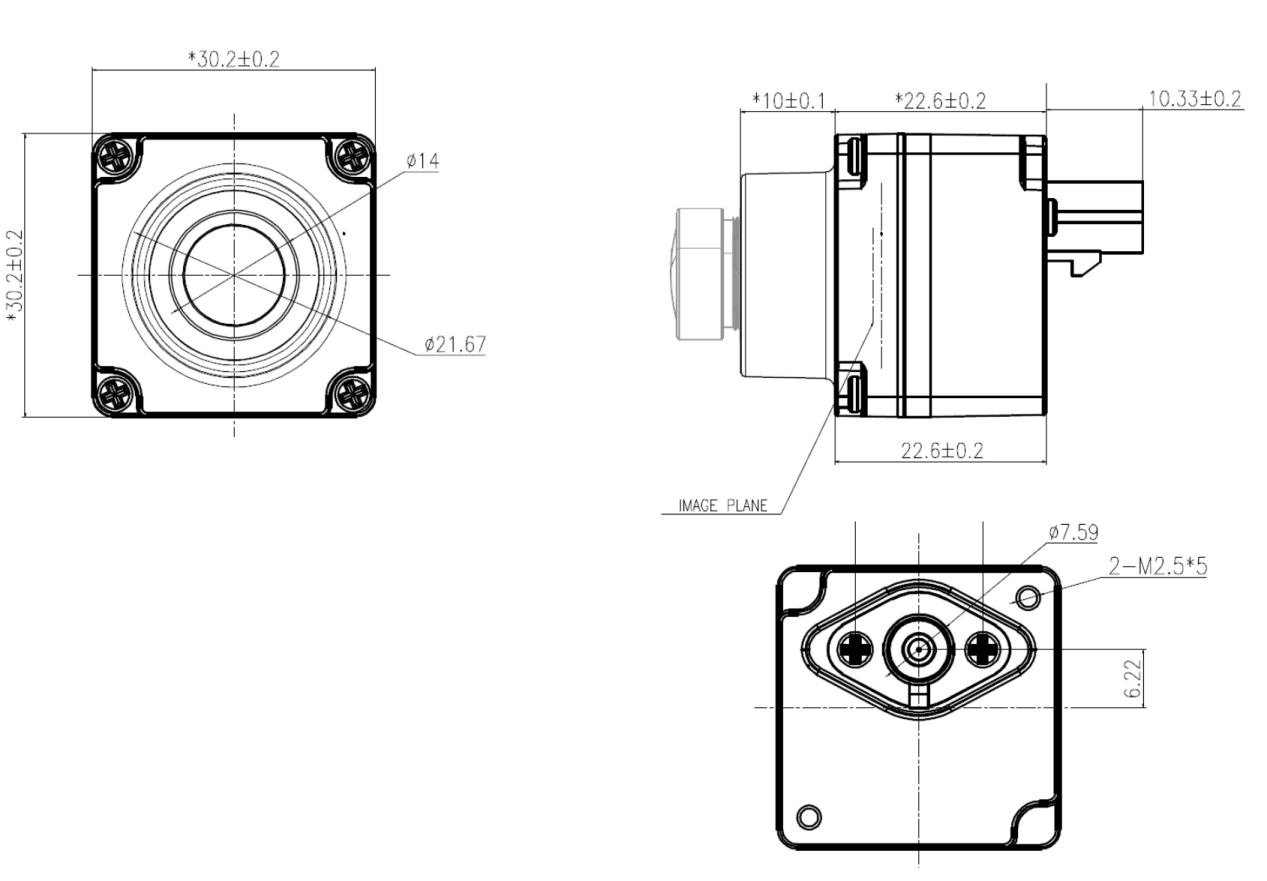
Camera module dimensions
SensorONSEMI 2.3MP AR0231 RGGB
ISPAP0202
Image size1/2.7 inch CMOS
Output pixels1920H × 1080V
Pixel size3 µm
Pixel typeBack Side Illuminated (BSI)
Frame rate1920×1080 / 22 fps
HDR rangeUp to 120 dB
Output dataParallel / YUV422-8bit
SerializerMAXIM MAX96705
Camera interfaceCoaxial
Power supply5–16V POC
Current< 200 mA
ConnectorAmphenol (Z Type Fakra)
Operating temperature-40°C ~ +85°C
DimensionsW: 30mm, L: 30mm, H: 22.5mm
Weight< 50 g

5. Radar — RS-Ruby-80 LiDAR

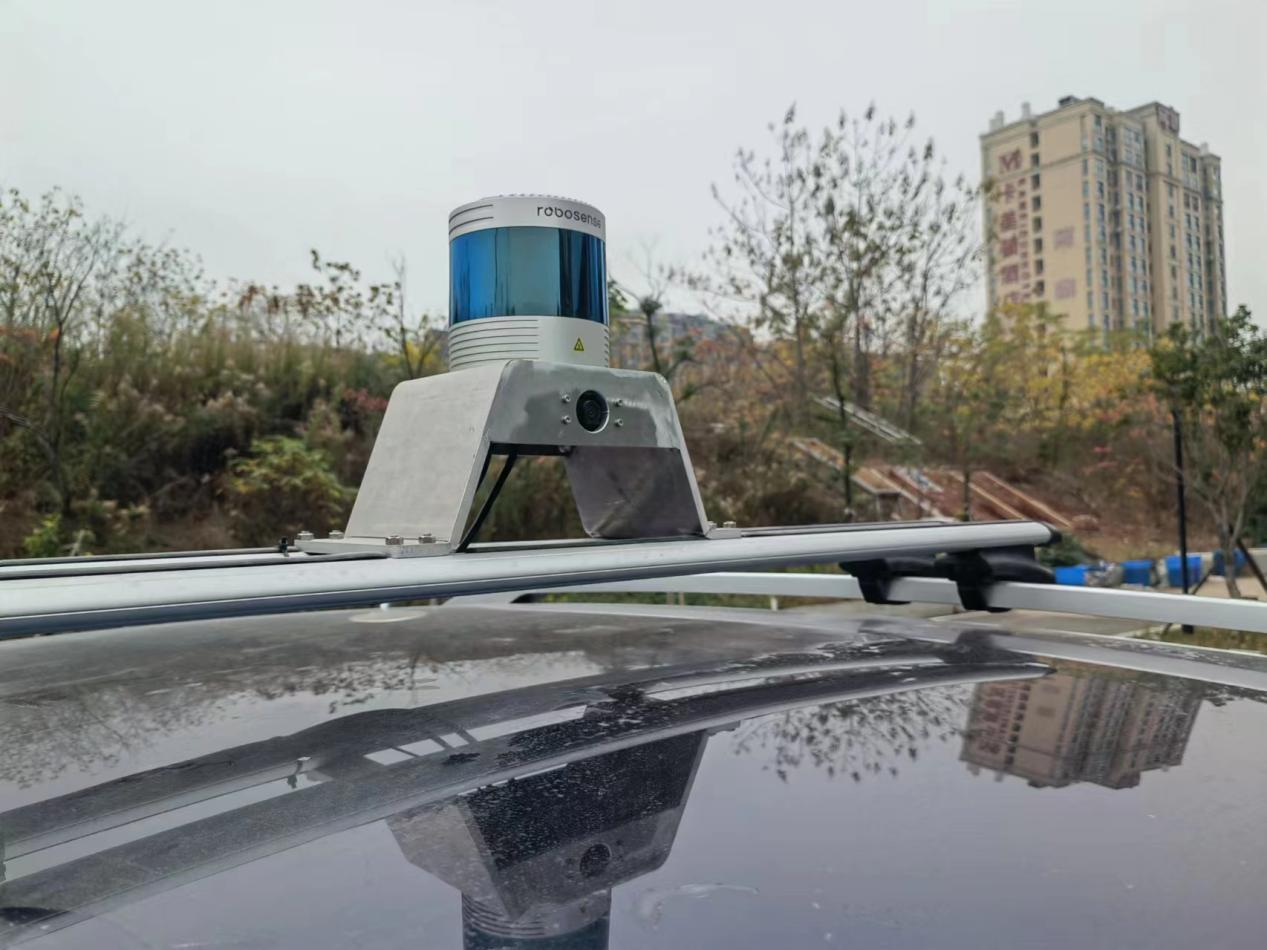
The brand-new 80-line LiDAR, RS-Ruby-80, is developed based on the RS-Ruby Plus platform. Featuring a vertical angular resolution of 0.1° and a ranging capability of 180 m @10% NIST, it fully meets the environmental perception requirements for autonomous passenger cars, trucks, buses, and mining vehicles.

Compared with the RS-Ruby Lite, the RS-Ruby-80 achieves a 50% reduction in volume, a 50% reduction in weight, and a 28% drop in power consumption, while delivering significantly improved performance and longer-range lane line detection.

Vehicle-mounted radar / LiDAR
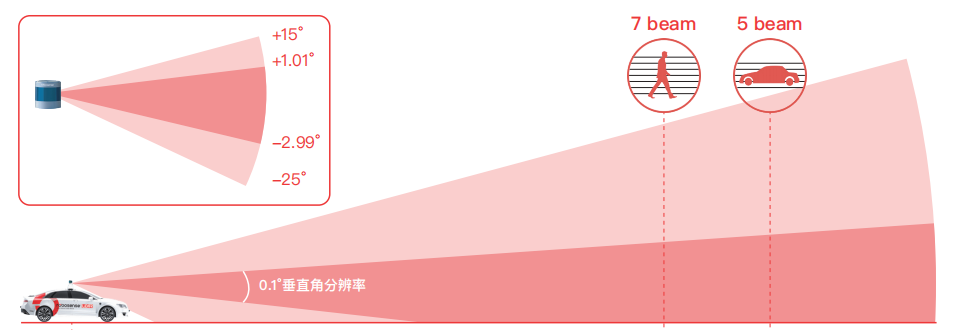
Field of view and ranging range of the LiDAR
Number of lines80
Laser wavelength905 nm
Laser safety classClass 1 eye-safe
Blind zone≤ 0.4 m
Vertical field of view40° (−25° ~ +15°)
Ranging capability200 m (180 m @ 10% NIST)
AccuracyUp to ±3 cm
Vertical angular resolution0.1° (−2.99° ~ +1.01°)
Horizontal field of view360°
Horizontal angular resolutionBalanced: 0.2°/0.4°; High-Performance: 0.1°/0.2°
Frequency / rotation speed10/20 Hz — 600/1200 rpm
Point output rateBalanced: ~1.44M pts/s (single), ~2.88M pts/s (dual); High-Performance: ~2.88M pts/s (single), ~5.76M pts/s (dual)
Ethernet output1000M Base T1, UDP packets
Operating voltage9–32 V
Power consumptionBalanced: 24 W; High-Performance: 27 W
Weight~1.85 kg (excluding cable)
Time synchronization$GPRMC with 1PPS, PTP & gPTP
DimensionØ125.00 mm × H128.00 mm
Operating / storage temperature−40°C ~ +60°C / −40°C ~ +85°C
Ingress protectionIP67, IP6K9K

6. GNSS+INS — Bynav X1

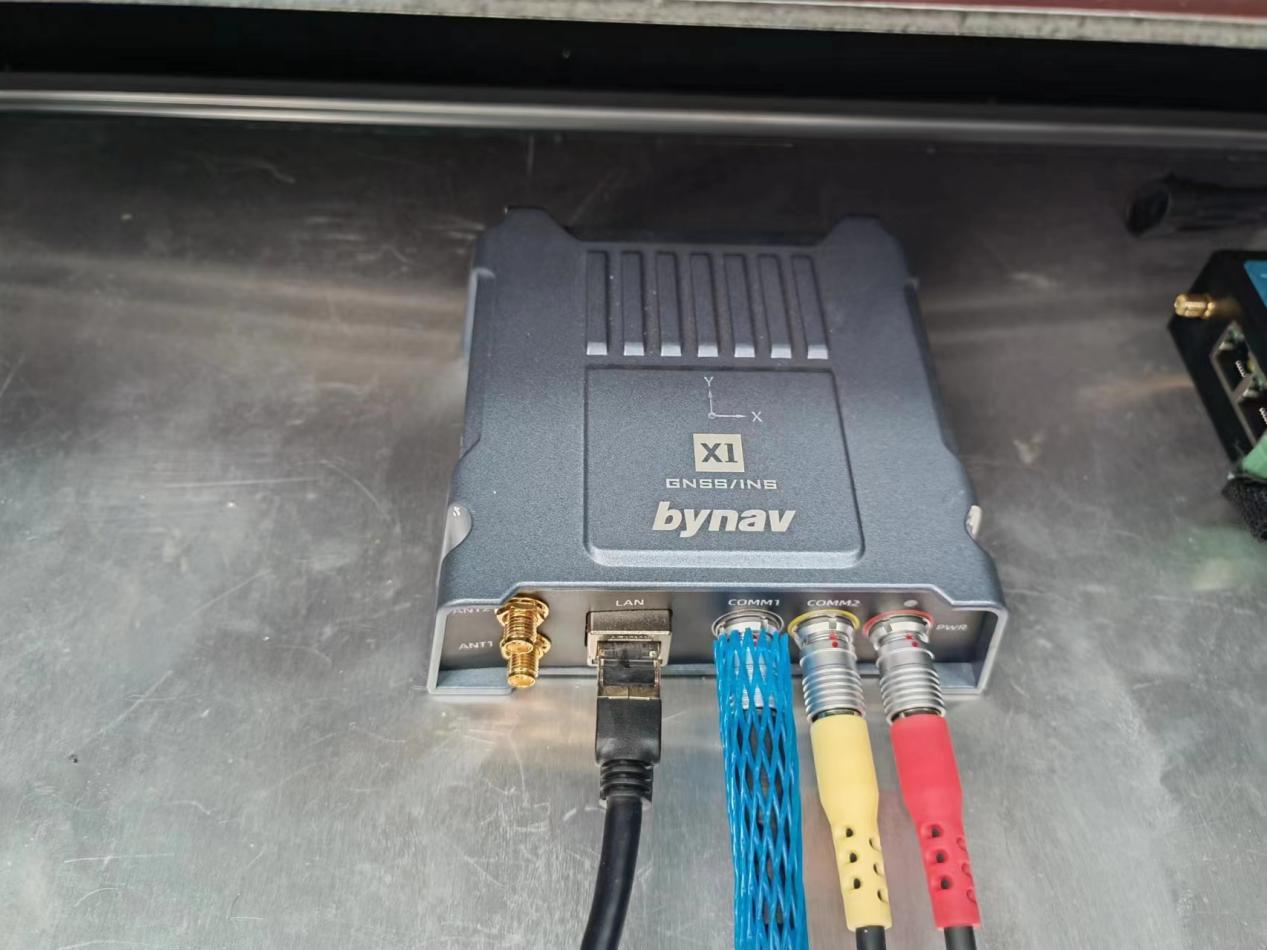
Dual-antenna RTK positioning and orientation enable GNSS+INS high-precision integrated navigation: leveraging GNSS signals received by dual antennas, this solution independently provides accurate position and attitude information, improving robustness and usability. The X1 adopts deep coupling technology combining GNSS positioning and IMU inertial measurement, outputting high-precision position, velocity, and attitude in real time.

It supports free firmware upgrades for three years, multiple interfaces (Ethernet and serial), and event-synchronized I/O for coordinated operation with other sensors such as LiDAR and SLAM systems. Optimized for vehicle applications via vehicle dynamics modeling, it handles urban road occlusions and highway signal interference, delivering continuous, stable, high-precision positioning for intelligent vehicles.

Physical integrated navigation unit, Bynav X1
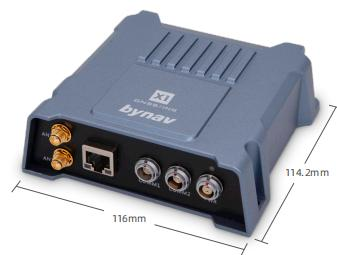
GNSS/INS dimensions
Overall configurationSix-system multi-frequency reception (GPS, GLONASS, BDS, BDS-3, Galileo, QZSS, NavIC)
Horizontal positioning accuracy (RMS)Single point: 1.5 m; RTK: 1 cm + 1 ppm
Vertical positioning accuracy (RMS)Single point: 2.5 m; RTK: 1.5 cm + 1 ppm
Initialization≤ 10 s, reliability > 99.9%
Maximum data rateGNSS/RTK: 5 Hz; INS position/attitude & IMU raw data: 125 Hz
Time to first fixCold start: ≤ 60 s; Warm start: ≤ 40 s
Time synchronization accuracy20 ns RMS
Velocity limit300 m/s
Reacquisition after loss-of-lock≤ 1 s
Calculation latencyINS: ≤ 5 ms; RTK: ≤ 60 ms
GyroscopeRange ±450 deg/s; bias stability 1.2 deg/hr; angular random walk 0.08 deg/√hr
AccelerometerRange ±10 g; bias stability 16 µg; velocity random walk 0.033 m/s/√hr
Communication ports2× RS-232 (up to 921,600 bps), 1× Ethernet (10/100 Mbps), 1× CAN (1 Mbps), 1× EVENT output, 1× PPS output
Dimension / weight116 × 114.2 × 38.6 mm; 432 g
Power supply+9 V ~ +32 VDC, 4.8 W
Operating / storage temperature-40°C ~ +85°C / -55°C ~ +85°C
Ingress protectionIEC 60529 IPX7 (waterproof), IP6X (dustproof)